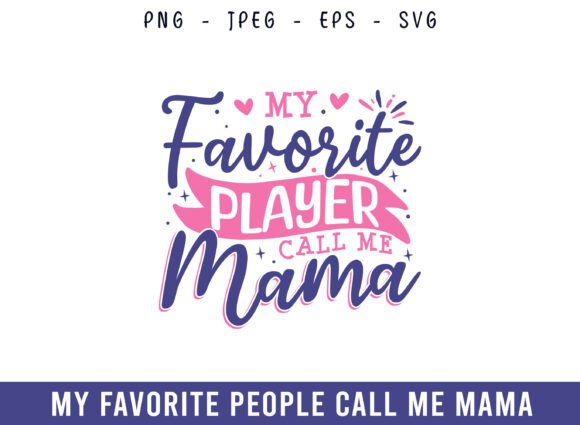
My Favorite Soccer Player Call Me Mama Design Review
As a professional embroidery digitizer and product reviewer, I approach every new machine embroidery design with a critical eye. When evaluating the "My Favorite Soccer Player Call Me Mama" graphic for real-world application, my primary concern is not just how it looks on a screen, but how it translates into thread on fabric. This design sits at the intersection of sports enthusiasm and maternal pride, a niche that performs exceptionally well for Etsy sellers and craft business owners targeting soccer moms. However, because this asset is marketed as an SVG with 100% vector shapes intended for both print and stitch, we must carefully assess its viability as a dedicated embroidery file before committing it to a production run.
First Impressions: Visual Hierarchy and Stitch Translation
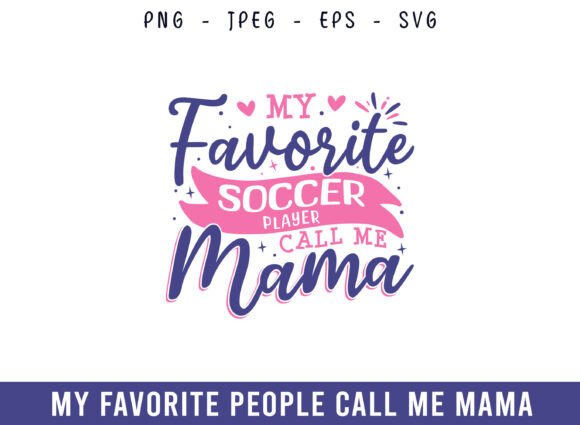
Upon opening the source files, the layout of "My Favorite Soccer Player Call Me Mama" immediately suggests a bold, varsity-inspired aesthetic. The typography is the hero here, which is excellent for custom apparel. From a digitizing perspective, blocky, athletic fonts are generally safer for embroidery than script fonts because they accommodate wider column widths without requiring excessive trims. The phrase naturally breaks into three distinct lines, creating a balanced stack that fits well within standard 4x4 or 5x7 hoop sizes.
The mood is energetic yet sentimental. For a handmade product, this emotional connection is vital. Customers aren't just buying a shirt; they are buying identity. As a designer, I appreciate that the vector shapes are clean. Clean vectors usually result in cleaner digitizing paths, meaning fewer jump stitches and a more professional finish. However, since this is a resizable graphic, you must verify the aspect ratio after scaling. Stretching a design to fit a larger sweatshirt embroidery area can sometimes distort letter spacing, making the text look disjointed when stitched out.
Real-World Application: The Custom Sweatshirt Test
To truly judge this design, I mentally simulated a recent client project: a custom fleece sweatshirt order for a youth soccer league fundraiser. In this scenario, the "My Favorite Soccer Player Call Me Mama" design serves as the centerpiece. Fleece is a high-pile fabric that can swallow fine details. Because this design relies heavily on text, I would recommend utilizing a satin stitch border or a light fill stitch background behind the letters to create a stable foundation. This prevents the fabric texture from interfering with legibility.
For this specific embroidery project, color contrast is non-negotiable. The product description mentions easy color changes for dark or white t-shirts. In embroidery, this means you need to plan your thread palette strategically. If stitching on a navy sweatshirt, using white or metallic gold thread creates that classic team spirit look. If the design includes intricate internal details within the letters, ensure those details are large enough to remain visible once rendered in thread. A printable mockup is useful for sales, but a physical stitch-out on scrap fleece is mandatory to confirm that the design doesn't become too dense or stiff.
Navigating Fabric Challenges and Hoop Limitations
While this design is versatile, there are specific environments where caution is required. As an experienced reviewer, I have seen similar graphics fail when applied to stretchy performance wear without proper preparation. Athletic jerseys and moisture-wicking tees are popular for personalized gifts, but they are unstable. If you use "My Favorite Soccer Player Call Me Mama" on these materials, you must use a high-quality cutaway stabilizer and potentially a water-soluble topping to prevent the stitches from sinking into the knit.
Small hoop sizes present another challenge. If you attempt to shrink this design down for a baby bib or a sleeve cuff, the text may become illegible. There is a minimum column width for satin stitches—usually around 1mm—to prevent needle breaks and thread shredding. Before listing a baby embroidery item featuring this design, measure the smallest text element. If it falls below safe stitching thresholds, consider removing secondary elements or simplifying the font for that specific size. Never sacrifice stitch integrity for the sake of fitting a design into a smaller space.
Commercial Viability for Makers and Sellers
For small shop product lines, consistency builds trust. "My Favorite Soccer Player Call Me Mama" has strong commercial potential because it targets a passionate demographic. However, as a seller, you must differentiate your finished goods. Since this is a digital asset available to others, your value add comes from execution. Pairing this design with unique fabric choices, such as heathered cottons or boutique-style raglan tees, elevates it beyond a generic graphic.
When creating design assets for sale or personal use, always check the licensing terms explicitly. While the product allows for resizing and color changes, confirm whether you can sell the digitized embroidery version or only the physical finished product. Protecting your business means respecting intellectual property. Furthermore, if you are selling the physical finished product, photograph it in natural light. Show the texture of the stitches. Buyers want to see that the "My Favorite Soccer Player Call Me Mama" design isn't just a flat print, but a tactile, high-quality piece of craftsmanship.
Technical Notes for Optimal Stitch Quality
To ensure this design performs beautifully across various mediums, adhere to these practical guidelines derived from professional testing:
- Test Stitch Density: Vector graphics do not have inherent stitch density. When digitizing or purchasing a pre-digitized version, ensure the density matches your fabric weight. Too dense causes puckering on knits; too loose looks cheap on canvas tote bags.
- Verify Resizing Integrity: Just because a file is "resizable" doesn't mean it is stitch-safe at all scales. Always re-check stitch counts and underlay settings after significant resizing.
- Thread Color Mapping: Plan your thread sequence before hooping. Minimize color changes by grouping same-color elements together. This reduces production time for commercial embroidery runs.
- Fabric Compatibility: Avoid using this design on highly textured fabrics like terry cloth or boucle unless you use a heavy topping. The detail in the lettering will get lost.
- Mockup vs. Reality: Use black and white mockups to test contrast values before choosing thread colors. What looks good in RGB screen color might vibrate unpleasantly in polyester thread.
Final Verdict on Usability and Appeal
"My Favorite Soccer Player Call Me Mama" is a robust candidate for seasonal and evergreen collections. Its strength lies in its clear communication and adaptable layout. For the Etsy seller or hobbyist, it offers a reliable foundation for holiday embroidery and end-of-season gifts. The key to success is treating the vector art as a blueprint rather than a final product. Embroidery is a mechanical art form with physical limitations that pixels do not possess.
By respecting stitch physics, selecting appropriate stabilizers, and testing on actual garment substrates, you can transform this digital graphic into a premium embroidered patch or apparel feature that customers cherish. Whether you are applying it to a mug, a cap, or a premium sweatshirt, the design’s sentiment resonates deeply. Just remember that in our industry, quality execution is what turns a simple graphic into a beloved keepsake. Always validate your specific machine's compatibility and the design's technical parameters before starting your next big project.