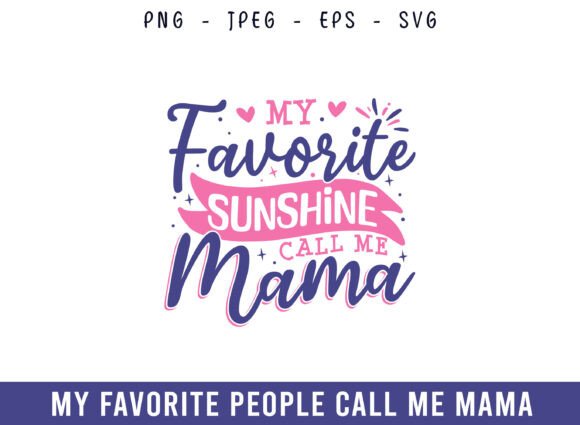
My Favorite Sunshine Call Me Mama Design Review
When evaluating a new digital asset for my embroidery business, I look past the cute preview image and focus immediately on structural integrity. As a designer who produces custom apparel and personalized gifts daily, I need to know if a graphic will actually stitch out cleanly or if it will cause tension issues and thread breaks. My first impression of the My Favorite Sunshine Call Me Mama Design is that it carries a distinct warmth and nostalgic weight. The layout suggests a balance between playful typography and illustrative elements that feels appropriate for Mother’s Day merchandise without looking generic. However, translating this vector-based graphic into a tangible machine embroidery design requires careful consideration of how those 100 vector shapes will interact with needle and thread.
Translating Vector Shapes to Stitch Reality
The product description highlights that this file is made with 100 vector shapes and is fully resizable. For an Etsy seller or small shop owner, this scalability is a massive advantage, but it also introduces a variable that demands attention. In the world of Graphics and Crafts, vectors are mathematically perfect lines, but embroidery is physical. When I prepare this design for a sweatshirt embroidery project, I am not just resizing an image; I am recalculating stitch density. If you scale this design up for a large tote bag design, the fill stitch areas may become too sparse unless adjusted in your digitizing software. Conversely, shrinking it down for a baby embroidery onesie could cause the satin stitch columns to overlap, creating a stiff, bulletproof patch of thread that ruins the drape of the garment.
Because this is marketed as an SVG with easy color changes, it serves as an excellent foundation for a digital embroidery file. However, users must understand that changing colors for dark versus white t-shirts involves more than swapping hex codes. For dark fabrics, you will likely need to add a white underlay or knockdown stitch to prevent the fabric texture from showing through the thread. On white garments, you can utilize lighter thread colors directly against the fabric. This versatility makes the My Favorite Sunshine Call Me Mama Design a strong candidate for commercial embroidery, provided you adjust the technical parameters for each specific fabric type.
Real-World Application: The Custom Tote Bag Test
To truly judge the viability of this asset, I mentally walked through a recent client request for a personalized gift: a heavy canvas tote bag intended as a premium Mother's Day present. Canvas is unforgiving. It has a coarse fabric texture that can swallow fine details. When applying this design to such a surface, the "Sunshine" element needs to be bold enough to remain legible from a distance. If the rays of the sun are rendered as delicate running stitch lines, they might get lost in the weave of the canvas.
In this scenario, I would treat the My Favorite Sunshine Call Me Mama Design as a hybrid applique design rather than a full stitch-out. Using the vector outlines as placement guides for fabric appliqués reduces the total stitch count significantly, keeping the tote bag lightweight and flexible while ensuring the design pops visually. This approach also increases production speed, which is vital for any craft business handling bulk holiday orders. The emotional resonance of the phrase "Call Me Mama" combined with a tactile fabric application creates a high-value handmade product that justifies a higher price point compared to standard printed merchandise.
Navigating Fabric Limitations and Hoop Constraints
While the design is versatile, there are specific environments where caution is necessary. Stretchy knits, such as performance tees or lightweight jersey, pose a challenge for detailed graphics. If the My Favorite Sunshine Call Me Mama Design contains dense lettering surrounded by decorative elements, the stabilizer choice becomes critical. A cut-away stabilizer is non-negotiable here to prevent distortion. I have seen similar designs fail on stretchy fabric because the hoop size was too large, allowing the material to shift during the stitching of the outer sunshine rays. Always use the smallest hoop possible that accommodates the design to maintain tension consistency.
Furthermore, consider the end-use care instructions. Items like kitchen towels or baby blankets require frequent washing. If the design utilizes intricate satin stitch borders or tiny text details, these elements may fray over time. For products destined for heavy wear, I recommend simplifying the design assets by removing microscopic details that cannot withstand industrial laundering. Always test the design on scrap fabric first. Run a black and white mockup stitch-out to check contrast and clarity before committing expensive thread and garments to the final run. This step saves money and protects your reputation as a professional maker.
Commercial Value and Brand Consistency
For creative entrepreneurs selling finished items, the visual appeal of your embroidery directly correlates to customer trust. A clean, well-executed stitch-out signals quality. The My Favorite Sunshine Call Me Mama Design offers a cohesive theme that can anchor a seasonal collection. Whether used on caps, aprons, or pillow covers, maintaining consistent thread colors and placement across different products builds brand recognition. Buyers are more likely to return to an Etsy seller whose work looks uniform and professional.
However, a crucial note for digital product sellers and apparel decorators: always verify licensing. While the file allows for color changes and resizing, you must confirm whether the license permits selling the digitized embroidery file itself or only the physical finished product. Misunderstanding this distinction can lead to copyright issues. Additionally, when creating printable mockups for your listings, ensure the digital representation accurately reflects what the machine embroidery design will actually look like. Overly polished digital previews that differ from the textured reality of embroidery can lead to customer disappointment and returns.
Designer Notes for Optimal Results
Before loading this file into your machine, take these practical steps to ensure success:
- Verify File Compatibility: Ensure your machine reads the specific embroidery file format derived from the SVG. Not all machines interpret converted vectors identically.
- Audit Stitch Density: Check the density settings after resizing. Adjust pull compensation to account for fabric push-and-pull, especially on curved surfaces like caps.
- Test Thread Contrast: View the design in grayscale to ensure the "Mama" text remains readable against the sunshine background regardless of color palette choices.
- Stabilizer Matching: Pair tear-away stabilizers with stable woven fabrics and cut-away stabilizers with knits or stretchy materials.
- Detail Inspection: Zoom in to 400% in your software to check for overlapping stitches or gaps in the vector conversion that could cause needle breaks.
The My Favorite Sunshine Call Me Mama Design holds significant potential for both personal projects and commercial ventures. Its sentiment is timeless, and its vector construction offers flexibility. By approaching it with a technician’s eye rather than just a crafter’s enthusiasm, you can transform this digital graphic into a durable, beautiful embroidered heirloom that honors the title of Mama with the quality it deserves. Whether you are making a single holiday gift or stocking a boutique, respecting the relationship between the digital file and the physical fabric is the key to a successful outcome.