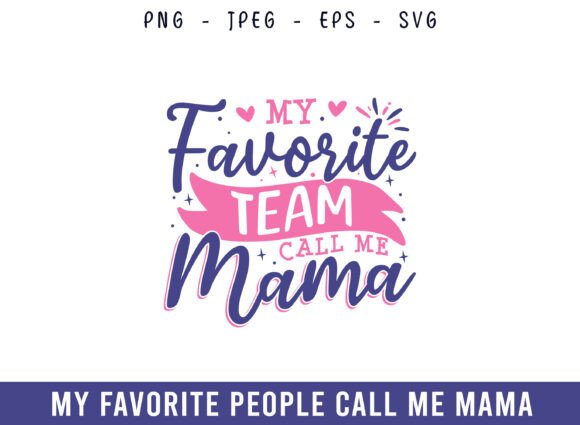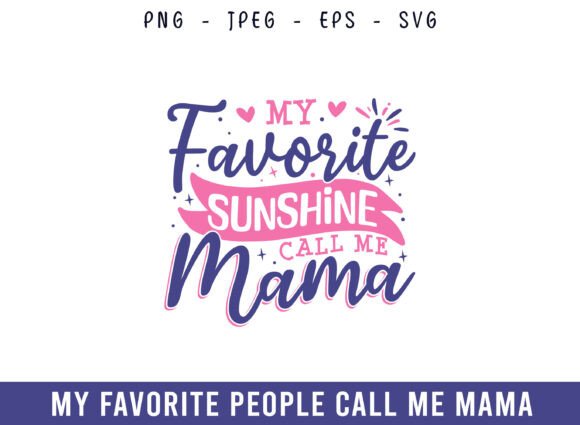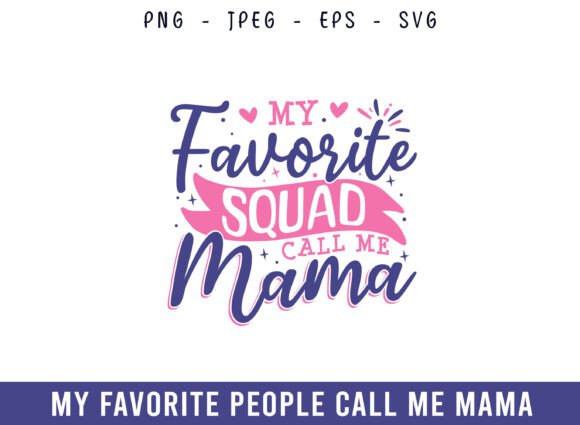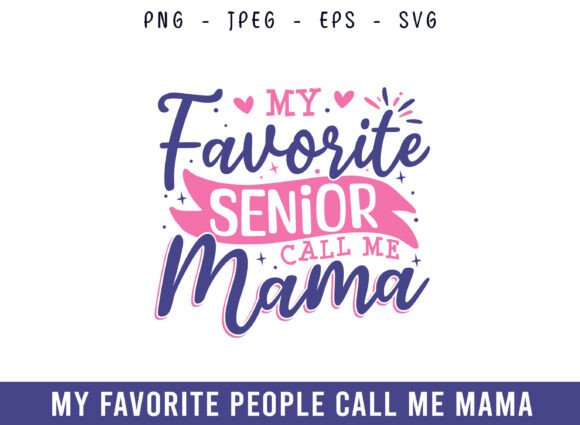
My Favorite People Call Me Mama Design Review
As a professional embroidery designer and product reviewer, I approach every new graphic asset with a critical eye. When evaluating the My Favorite People Call Me Mama Design, my primary focus is not just on its digital aesthetic but on its translatability to thread. This design arrives as an SVG Mothers Day Special, marketed specifically for versatility across dark t-shirts, white tees, and mugs. While it is categorized under Graphics and Crafts, its true value lies in how well those 100% vector shapes hold up when converted into a machine embroidery design. For Etsy sellers, apparel decorators, and makers, understanding the bridge between this digital file and a finished product is essential for commercial success.
First Impressions: Vector Clarity Meets Maternal Sentiment
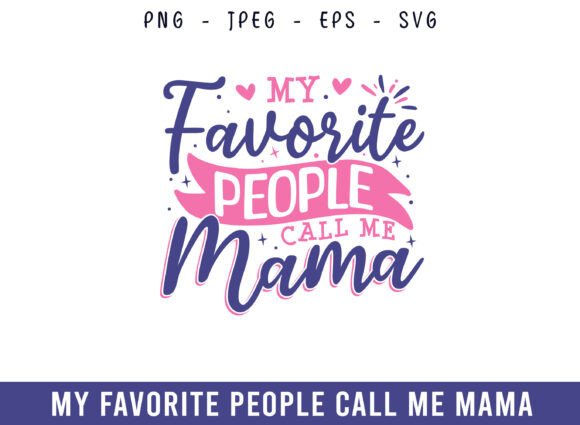
The immediate strength of the My Favorite People Call Me Mama Design is its clean geometry. Because it is constructed from 100% vector shapes, the lines are mathematically precise rather than pixel-based. In the world of embroidery digitizing, this is a massive advantage. Jagged edges or low-resolution artifacts in source files often result in messy satin stitches or uneven fill areas. Here, the smooth curves suggest that if you are converting this SVG into an embroidery file, your auto-digitizing software will have a much easier time tracing accurate paths.
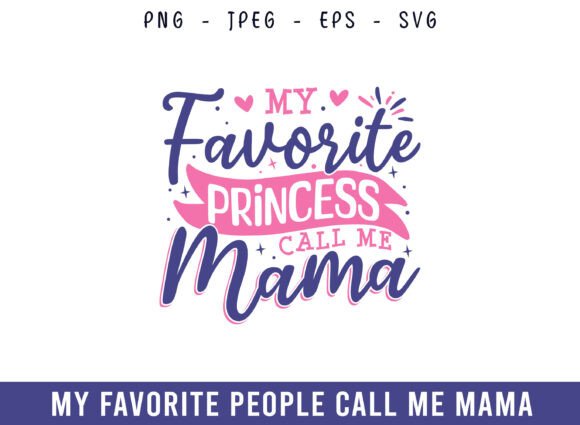
Visually, the mood strikes a balance between modern typography and classic sentiment. It avoids overly ornate script that can become illegible when stitched at smaller sizes. Instead, the layout feels intentional and readable. For a craft business owner creating Mother’s Day merchandise, this legibility is paramount. Customers want personalized gifts that communicate clearly from a distance, whether on a sweatshirt across a room or a tote bag carried at a market. The design’s inherent scalability means you can resize it for a baby onesie or an adult hoodie without losing structural integrity, provided you adjust your stitch parameters accordingly.
Real-World Application: Stitching the Custom Sweatshirt
To truly evaluate this asset, I mentally walked through a recent client project: a custom embroidered sweatshirt for a boutique’s Mother’s Day collection. The goal was a high-perceived-value handmade product that could be produced efficiently. Using the My Favorite People Call Me Mama Design, I considered the placement on the left chest versus the center back.
For a center-back placement on a fleece sweatshirt, the design performs exceptionally well. Fleece has a pile that can swallow fine details, but because this graphic relies on bold shapes rather than intricate filigree, it maintains visual weight. I envision using a dense fill stitch for the main body of the text to ensure coverage against the fabric texture. However, the real test comes with color adaptation. The product description notes easy color changes for dark or light garments. In practice, this means the design likely lacks complex shading gradients, making it ideal for solid thread colors. On a dark navy sweatshirt, switching to a metallic gold or crisp white polyester thread creates a premium look. For a white tee, a variegated rayon thread adds depth without requiring multiple needle changes, keeping production costs down for small shop products.
Navigating Fabric Variables and Stabilizer Choices
While the vector nature of this design is forgiving, the substrate dictates your success. If you are applying this to a stretchy knit t-shirt, the "easy change color" feature is only half the battle. You must pair the design with appropriate stabilizer. A cut-away stabilizer is non-negotiable here to prevent the letters from distorting after washing. The design’s bold shapes require adequate anchoring; otherwise, the tension of the satin stitch borders could cause tunneling on lightweight cotton.
Conversely, if you are adapting this for a structured item like a canvas tote bag or an apron, the design’s rigidity works in your favor. These items can handle higher stitch density. However, be cautious if attempting to use this on curved surfaces like caps. Unless the design has been specifically digitized for a cap frame with proper pull compensation, the horizontal span of "Mama" might distort. Always test on a scrap piece of similar fabric texture before committing to a commercial run.
Commercial Viability for Makers and Sellers
For those running an Etsy shop or selling at craft fairs, the My Favorite People Call Me Mama Design offers strong merchandising potential. Its universal appeal makes it a safe bet for holiday embroidery sales. However, professionalism separates hobbyists from sustainable businesses. When listing finished products featuring this design, your mockups must accurately represent the stitch-out. Do not rely solely on digital previews. Create a physical sample to photograph, showing the actual thread sheen and texture. Buyers trust sellers who demonstrate that their digital embroidery files translate beautifully to reality.
Furthermore, consider the licensing. As a digital product seller or creator of custom apparel, you must verify the commercial usage rights associated with this specific SVG. Just because a file is resizable does not automatically grant permission to sell unlimited finished goods or redistribute the digitized embroidery file itself. Protecting your business means respecting intellectual property while leveraging these design assets ethically.
Critical Designer Notes for Successful Execution
Before loading this design into your machine or listing it in your shop, adhere to these practical checkpoints:
- Verify Hoop Size Compatibility: Even though vectors are resizable, your machine has physical limits. Ensure the final dimensions fit within your hoop size with adequate clearance for the presser foot.
- Test Thread Contrast: What looks good on a screen may vanish on fabric. Test the design in black and white mockups first, then stitch a sample on both dark and light backgrounds to confirm visibility.
- Inspect Small Details: If resizing down for baby embroidery or sleeve cuffs, check that internal spaces in letters remain open. You may need to simplify the design or switch to a running stitch outline for tiny versions.
- Evaluate Stitch Density: Since this originates as a graphic, ensure your digitizing settings account for fabric type. Dense fills on thin fabric cause puckering; sparse fills on towels leave gaps.
- Check Licensing Terms: Confirm whether you can sell finished products, printable mockups, or modified digital files. Documentation protects your craft business from future disputes.
- Wash Test: For items like kitchen towels or baby clothes that face frequent laundering, wash your test swatch three times. This reveals whether the stitch density and stabilizer choice were sufficient for long-term wear.
Final Verdict on Versatility and Value
The My Favorite People Call Me Mama Design stands out as a robust foundation for maternal-themed projects. Its vector construction provides a significant head start for digitizers, reducing the cleanup time usually required for raster images. Whether you are producing a heartfelt personalized gift or stocking inventory for a seasonal rush, this design offers the flexibility needed for diverse applications. By respecting the technical requirements of machine embroidery—from proper stabilization to thoughtful color selection—you can transform this digital graphic into a high-quality embroidered patch, apparel accent, or home decor piece that resonates with customers. Ultimately, its success depends not just on the file itself, but on the maker’s willingness to test, adapt, and refine the design for each unique textile application.