My Favorite Doctor Call Me Mama Design Review
As a professional embroidery digitizer and product reviewer, I approach every new graphic with a specific question: will this actually stitch out cleanly on real fabric? When evaluating the My Favorite Doctor Call Me Mama Design, my focus shifts immediately from the screen to the hoop. This design carries a distinct emotional weight that resonates deeply with mothers in the medical field, but emotional resonance does not guarantee technical success. For Etsy sellers, craft business owners, and apparel decorators, understanding how this vector-based artwork translates into a tangible machine embroidery design is the difference between a bestseller and a production headache.
First Impressions and Emotional Resonance
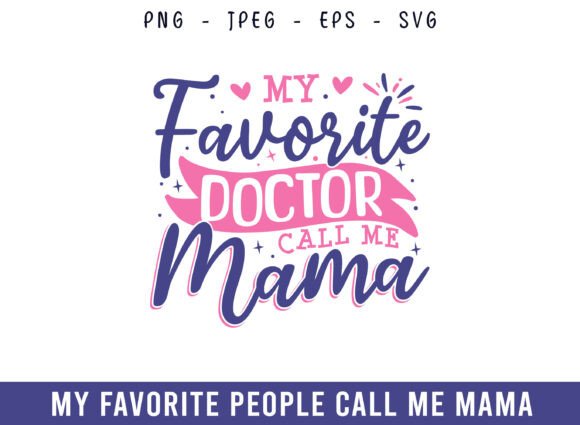
The visual personality of this design strikes a careful balance between professional pride and maternal warmth. It avoids the sterile look of generic medical clip art while steering clear of overly cutesy nursery aesthetics. The layout suggests a clean hierarchy where the text "My Favorite Doctor" supports the central focal point of "Call Me Mama." As a digital embroidery file, the 100% vector shapes provide a crisp foundation. Vectors are essential for us because they allow for infinite resizing without pixelation, which is critical when adapting a single design for everything from a baby bib to an adult sweatshirt.
However, vectors are merely a map; the terrain is determined by your digitizing software and machine settings. The mood here is celebratory yet grounded. It feels appropriate for Mother’s Day specials, graduation gifts for nursing students who are also moms, or appreciation gifts for pediatricians. For a handmade product seller, this specific niche targeting increases perceived value because it speaks to a dual identity that is often underserved in the general marketplace.
Real-World Application: The Custom Sweatshirt Test
To truly evaluate this asset, I mentally placed it in a real-life production scenario: creating a custom embroidered crewneck sweatshirt for a boutique client. Sweatshirts are a staple for Etsy sellers and small shop products, but fleece presents unique challenges due to its texture and stretch.
In this scenario, the My Favorite Doctor Call Me Mama Design needs to command attention without sinking into the fabric pile. Because the product description notes easy color changes for dark or white shirts, I envision running two variations. On a white sweatshirt, a navy or charcoal thread would offer classic contrast. On a dark heather grey sweatshirt, switching to white or metallic gold thread transforms the piece into premium custom apparel. The ability to easily modify colors in the source file saves significant prep time, allowing makers to offer multiple SKU variants from a single master design.
For this project, I would treat the lettering as the primary structural element. If the design includes intricate flourishes, I would consider converting those elements into an applique design or simplifying them into satin stitches to reduce bulk. A heavy fill stitch on fleece can cause puckering, so verifying the intended stitch type before purchasing is vital. The goal is a finished product that looks intentional and high-end, not like a stiff patch glued onto soft fabric.
Technical Considerations for Apparel and Accessories
Versatility is key for commercial embroidery assets. While sweatshirts are forgiving, other applications require stricter adherence to technical limits. Here is how this design performs across different categories:
- Tote Bag Design: Canvas tote bags are excellent for this theme. The stable weave of canvas handles higher stitch density well. However, ensure the design size fits within the printable area of standard hoops. A centered chest placement or lower-corner accent works better than a massive center print that might distort the bag's shape.
- Baby Embroidery: If adapting this for baby clothes or blankets, caution is required. Infant skin is sensitive to dense stitching. You must check if the embroidery file allows for reducing stitch density or converting fills to running stitches. Always test on scrap cotton jersey first to ensure the fabric doesn't tunnel.
- Mugs and Sublimation: Since the description mentions mugs, note that sublimation requires different preparation than embroidery. Vector shapes are perfect for sublimation, but if you are embroidering a mug wrap or coaster, verify the hoop size compatibility. Curved surfaces demand specialized stabilizers and hooping techniques.
- Embroidered Patches: This design has strong potential as a patch for lab coats or scrub caps. Patches require a merrowed edge or tight satin border. Ensure the outer boundary of the vector art is continuous and suitable for a cut-line.
Navigating Fabric Limitations and Stabilization
Even the most beautiful graphics fail without proper stabilization. When working with the My Favorite Doctor Call Me Mama Design, pay close attention to fabric texture. Stretchy knits require cut-away stabilizer to prevent distortion during washing. Woven fabrics like tea towels or aprons may only need tear-away backing. If the design features small text details, using a water-soluble topping is non-negotiable on textured fabrics to keep letters legible.
I advise testing the design in black and white mockups before committing thread. This reveals whether the contrast relies solely on color or if the value structure holds up independently. For commercial embroidery businesses, this step prevents costly re-dos. Also, confirm licensing terms explicitly. Just because a file is sold as a digital product does not automatically grant unlimited commercial rights for selling finished goods or reselling the digitized file itself. Protect your business by verifying these details upfront.
Designer Notes for Professional Results
Achieving a professional finish goes beyond hitting the start button. Use these practical notes when integrating this design into your workflow:
- Verify Stitch Types: Do not assume the vector art comes pre-digitized with optimal stitch paths. Confirm whether you are receiving a raw vector file requiring digitizing or a ready-to-stitch embroidery file. These are vastly different products.
- Test on Scrap Fabric: Never run a new design directly on a customer’s garment. Stitch out on similar fabric weight and weave to check registration and tension.
- Check Small Details: If the design includes tiny hearts or medical symbols, measure them physically. Anything under 4mm risks becoming a thread blob. Resize or simplify as needed.
- Thread Color Contrast: Photograph your test stitch-out in natural light. Screen colors differ from thread sheen. Ensure readability at arm's length.
- Mockup Accuracy: Create printable mockups that reflect actual placement. Showing a design centered on a shirt when it actually sits near the collar misleads buyers and damages trust.
Elevating Product Value Through Intentional Design
The My Favorite Doctor Call Me Mama Design succeeds because it targets a specific emotional intersection. For makers, the value lies not just in the artwork but in its adaptability. Whether you are producing holiday embroidery gifts, updating your shop’s spring collection, or fulfilling custom orders for hospital staff, this design offers a versatile foundation.
Remember that customers buy the feeling, but they return for the quality. By treating this vector asset with technical respect—verifying hoop sizes, selecting appropriate stabilizers, and testing rigorously—you transform a simple graphic into a cherished keepsake. In the competitive world of crafts and personalized gifts, that level of professional care is what distinguishes a hobbyist from a trusted brand. Always prioritize the integrity of the finished product over speed, and let the craftsmanship honor the sentiment behind the design.