My Favorite Dancer Call Me Mama Design Review
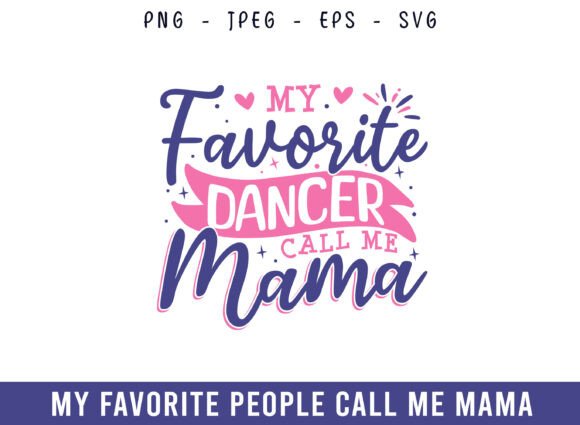
As a professional embroidery digitizer and product reviewer, I approach every new graphic with a specific question: will this actually stitch out cleanly on real fabric? When evaluating the My Favorite Dancer Call Me Mama Design, my focus shifts immediately from the screen to the hoop. This design sits at the intersection of sentimental value and technical execution, making it a staple for Mother’s Day collections and personalized dance mom gifts. However, because the source file is described as an SVG made with vector shapes rather than a pre-digitized embroidery file, there are critical considerations for crafters and Etsy sellers before this artwork touches a needle.
Translating Vector Art to Stitch Reality
The first impression of this design is one of clean, scalable lines. Being composed of 100% vector shapes is excellent for resizing without pixelation, but vectors do not have stitch attributes. For the machine embroidery designer, this means the My Favorite Dancer Call Me Mama Design serves as a pristine template rather than a ready-to-run DST or PES file. The visual personality suggests a blend of elegant script and silhouette artistry, likely requiring a combination of satin stitch for the lettering and fill stitch or running stitch for the dancer element.
When planning this as an applique design or direct embroidery, the vector origin allows for perfect customization. You can adjust the width of the satin columns to suit different thread weights or modify the dancer’s pose slightly to fit a specific hoop size. For small business owners creating custom apparel, this flexibility is vital. It ensures that whether you are stitching on a toddler’s t-shirt or an adult sweatshirt, the proportions remain balanced and the stitch density stays within safe limits for the fabric texture.
Real-World Application: The Dance Mom Sweatshirt Test
To truly judge this asset, I mentally applied it to a common client request: a personalized crewneck sweatshirt for a dance competition weekend. In this scenario, the My Favorite Dancer Call Me Mama Design needs to perform on fleece-backed cotton, which presents unique challenges. The "dancer" aspect implies movement and fine details, while the "Mama" text carries the emotional weight.
For this handmade product, I would prioritize a light cutaway stabilizer to prevent the design from distorting the stretchy knit fabric. Since the product description notes easy color changes for dark or white shirts, I envision testing two distinct looks. On a white sweatshirt, a classic rose gold or navy thread palette creates a timeless, boutique aesthetic. On a black garment, switching to metallic gold or bright white thread provides necessary contrast. However, when using light thread on dark fabric, you must account for underlay stitches to prevent the dark fabric from showing through the top stitching. This is where having control over the original vector shapes becomes a massive advantage, allowing you to add edge runs or tack-downs that a generic auto-digitized file might miss.
Navigating Fabric Limitations and Hoop Constraints
While versatile, this design requires careful placement depending on the finished product. Not all items in the Crafts category handle detailed graphics equally well. Here is where practical judgment matters most:
- Stretchy Fabrics: When embroidering on performance wear or thin jersey knits, the dancer’s finer lines may cause puckering if the stitch density is too high. Always test on scrap fabric identical to your final project.
- Textured Surfaces: If applying this to a terry cloth towel or a pique polo, the running stitch details of the dancer could get lost in the fabric pile. Consider adding a water-soluble topping to flatten the texture during stitching.
- Small Hoop Sizes: Resizing vector art down for a 4x4 hoop or a baby onesie requires simplifying. Tiny lettering in "Call Me Mama" may need to be converted to a simpler font style or increased in size to prevent thread breaks and illegibility.
- Curved Items: Caps and curved tote bags distort flat designs. The vertical alignment of the dancer relative to the text must be checked in your embroidery software to ensure it doesn't look tilted once wrapped around a curved surface.
Commercial Viability for Etsy Sellers and Makers
For creative entrepreneurs, the My Favorite Dancer Call Me Mama Design represents more than just a pretty picture; it is a potential revenue stream. Because it targets a specific niche—dance mothers—it has higher conversion potential than generic "Mom" designs. However, professionalism dictates that you verify licensing before selling. Ensure your purchase includes commercial rights for both physical embroidered patches and digital products if you plan to resell the SVG itself.
Visual appeal directly impacts buyer engagement. When listing this as a custom apparel item, use printable mockups that accurately reflect how embroidery looks versus print. Customers trust sellers who show actual stitch-outs. Highlighting that the design is re-sizable and adaptable for mugs, tumblers, and apparel adds perceived value. For commercial embroidery projects, consistency is key. Using the same vector base ensures that a repeat customer ordering a matching set for three daughters receives identical quality and sizing across different garment sizes.
Essential Designer Notes for Success
Before loading this design into your machine, adhere to these professional best practices to ensure a high-quality finished product:
- Verify File Compatibility: Confirm whether you are receiving a raw SVG for manual digitizing or a pre-digitized embroidery file. Do not assume machine compatibility without checking.
- Contrast Testing: Always view your thread color choices against the actual fabric in natural light. Screen colors often differ from polyester or rayon thread sheens.
- Density Check: Inspect the stitch count after digitizing. A dense satin stitch border on lightweight fabric will cause holes; a sparse fill stitch on heavy canvas will look cheap.
- Stabilizer Selection: Match your stabilizer to the fabric weight, not just the design size. Heavy designs on light fabric require robust support.
- Mockup Validation: Create black and white mockups to check value contrast independent of color. If the design reads poorly in grayscale, it will lack definition in embroidery.
Elevating the Handmade Standard
Ultimately, the My Favorite Dancer Call Me Mama Design succeeds when treated as a foundational element of a larger creative process. Its strength lies in its vector purity, offering experienced makers the freedom to tailor the stitch type, density, and scale to the specific demands of their chosen medium. Whether you are crafting a holiday gift, stocking a small shop with Mother’s Day specials, or fulfilling a custom team order, success comes from respecting the relationship between the digital art and the physical thread.
By approaching this graphics asset with a technician’s eye and a crafter’s heart, you transform a simple SVG into a cherished keepsake. Remember that in the world of machine embroidery, the most beautiful design is one that survives the wash, feels soft against the skin, and tells the wearer’s story with clarity. Take the time to digitize thoughtfully, test rigorously, and create with confidence.