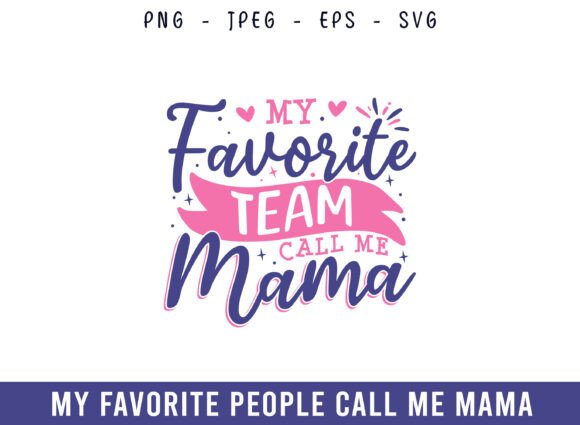
My Favorite Artist Call Me Mama Design Review
When evaluating a new machine embroidery design for my shop, I look past the digital preview and immediately imagine how it will behave under the needle. The My Favorite Artist Call Me Mama Design caught my attention not just because of its sentimental Mother’s Day appeal, but because of its structural promise as a vector-based graphic. As an experienced designer, I know that clean lines in software do not always translate to clean stitches on fabric. However, this design’s composition suggests a versatility that is essential for both personal projects and commercial inventory. It strikes a balance between playful typography and artistic flair, making it a strong candidate for custom apparel and personalized gifts.
First Impressions: Vector Clarity Meets Stitch Potential
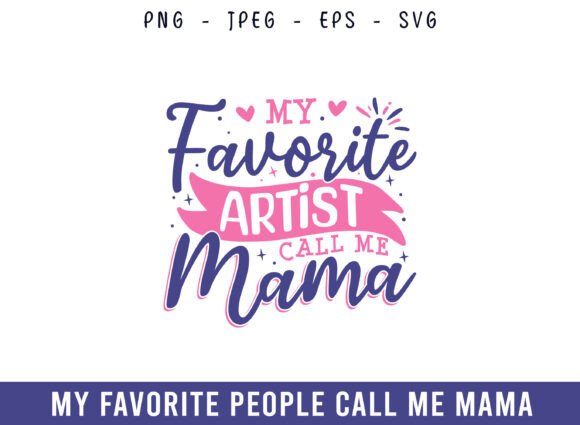
My initial assessment of the My Favorite Artist Call Me Mama Design focuses on its geometry. Being made with 100% vector shapes is a significant advantage for any embroidery digitizer or crafter. Unlike raster images that pixelate when resized, vectors maintain crisp edges. For embroidery, this means the conversion process from graphic to stitch file can be much cleaner. The layout feels balanced; the script "Mama" likely serves as the focal point, while "My Favorite Artist Call Me" acts as a supporting frame. This hierarchy is crucial for readability at various sizes. When I look at this design asset, I see a template that respects the limitations of thread while maximizing visual impact. It does not feel cluttered, which is often the downfall of text-heavy motherhood designs.
Real-World Application: The Custom Sweatshirt Test
To truly judge this design, I mentally placed it on a heavyweight cotton sweatshirt, a staple for Etsy sellers and small shop products. In this scenario, the My Favorite Artist Call Me Mama Design needs to perform as more than just a cute saying; it needs to be a viable product. Sweatshirt fleece has texture and loft, which can swallow fine details. Because this design relies on clear lettering, I would recommend using a robust stabilizer, perhaps a medium-weight cutaway, to prevent the fabric from shifting during stitching. The vector nature allows me to scale the design up for a center-chest placement without losing definition. For a boutique owner, this scalability is profitable. You can use the same source file for a toddler’s t-shirt and a mom’s oversized hoodie, maintaining brand consistency across different age groups and garment types.
Navigating Fabric Textures and Hoop Constraints
While the design is versatile, practical experience dictates caution with certain materials. If you are planning to use the My Favorite Artist Call Me Mama Design on a stretchy ribbed knit or a textured tea towel, you must adjust your expectations and settings. Thin, tiny lettering in the phrase "My Favorite Artist" could get lost in the weave of a linen towel or distort on spandex. In these cases, simplifying the design or increasing the satin stitch width is necessary. Furthermore, consider your hoop size before committing. A design this detailed requires adequate space for proper hooping tension. Trying to cram this into a 4x4 hoop might force you to reduce the size so drastically that the stitch density becomes too high, leading to puckering or needle breaks. Always verify the final dimensions against your machine’s capabilities.
Color Adaptation for Dark and Light Garments
The product description highlights the ease of changing colors for dark or white t-shirts, which is a critical feature for commercial embroidery. When stitching the My Favorite Artist Call Me Mama Design on black fabric, contrast is everything. A simple color swap isn't enough; you may need to add an underlay or a knockdown stitch if the design includes intricate fill areas to prevent the dark fabric from showing through lighter threads. Conversely, on white garments, you have more freedom with pastel thread colors, but you must ensure the outline is distinct enough to define the shape. For mug sublimation or vinyl applications, the vector format ensures sharp edges, but for embroidery, remember that thread has physical thickness. What looks like a hairline stroke on screen must become a tangible satin stitch or running stitch in reality.
Commercial Viability for Makers and Sellers
For those running a craft business or selling on Etsy, the My Favorite Artist Call Me Mama Design offers specific commercial advantages. Its aesthetic fits perfectly into the current trend of "artist mom" identity, making it highly searchable and relatable. However, professionalism comes from execution. Before listing a finished product, create printable mockups to test the visual weight of the design. Does it look centered? Is the text legible in thumbnail photos? Customer trust is built on seeing a realistic representation of the handmade product. Additionally, because this is a digital embroidery file source, always double-check your licensing. Ensure you have the right to sell physical embroidered items versus selling the digital file itself. Protecting your business starts with respecting intellectual property terms.
Technical Notes for Optimal Stitch-Outs
- Test on Scrap Fabric: Never run the My Favorite Artist Call Me Mama Design directly on a customer’s garment first. Test stitch density and registration on similar scrap material.
- Stabilizer Selection: Match the stabilizer to the fabric weight. Use tear-away for stable wovens and cut-away for knits to support the stitch structure long-term.
- Thread Contrast Check: View your thread choices in natural light. Digital screens can be deceiving regarding how colors interact with fabric texture.
- Resize Responsibly: While vectors are re-sizable, embroidery files have limits. Avoid reducing the design below 60% of its original digitized size to maintain stitch integrity.
- Licensing Verification: Confirm whether the license covers commercial embroidery sales, digital redistribution, or both before integrating it into your shop assets.
Elevating the Finished Product Value
Ultimately, the value of the My Favorite Artist Call Me Mama Design lies in how well it communicates emotion through craftsmanship. A poorly stitched design diminishes the sentiment, while a crisp, well-executed piece elevates it to a cherished keepsake. Whether you are creating a holiday gift, a nursery decor item, or a signature tote bag design, the attention to detail matters. The clean vector lines provide a solid foundation, but your skill in hooping, stabilizing, and color selection brings it to life. By treating this graphic not just as a download but as a blueprint for textile art, you ensure that every "Mama" who receives it feels the quality and care intended by the design. This thoughtful approach is what separates hobbyists from professional makers in the competitive world of customized crafts.